


 MX
MX
 US
US


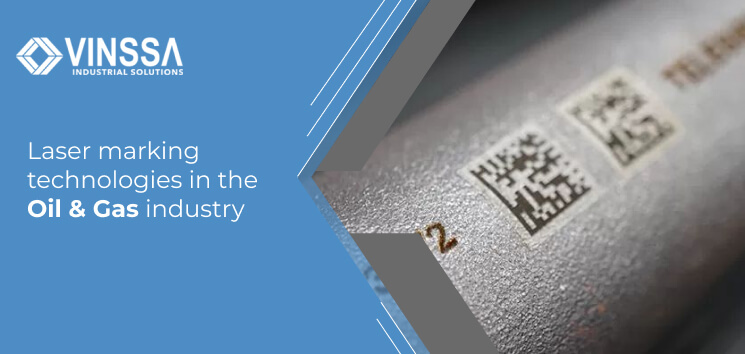
Laser marking technologies in the Oil & Gas industry
Oct 22, 2025 By: José Juan Aguillón
It is essential to have an industrial marking system that ensures the precise identification of equipment and components, thereby guaranteeing operational safety. This includes pipelines, tubes, valves, storage tanks, and oil platforms.
Commonly, this sector uses laser engraving for various tasks such as labeling equipment and parts to ensure proper identification, tracking and marking products, as well as complying with international standards like API and ISO.
What is direct part marking and what technologies enable it?
Direct part Marking (DPM) is an industrial identification method in which the mark is applied directly to the physical components of the systems (such as pipes, valves, equipment) to maintain the safety and operational efficiency of the infrastructure.
The ability to uniquely identify each component ensures traceability throughout its entire lifecycle, simplifying inspections, maintenance, and replacement. Accurate marking also improves inventory control and maintenance management of storage tanks.
Industrial marking systems, such as laser and dot peen, provide reliable and long-lasting solutions for the identifying and tracking equipment in the gas and oil industry, including pipes and valves. This marking withstand extreme conditions (corrosion, chemicals, high temperatures), ensuring legibility over time.
To ensure the required durability and precision, the industry relies on specialized physical marking technologies:
- Dot Peen Systems: Ideal for creating deep and permanent marks on hard metal surfaces, such as carbon steel and superalloys. They are commonly used for components that must remain identifiable even after intensive wear or surface treatment.
- Laser Marking Systems: These provide a contactless marking solution that preserves material integrity, creating sharp and durable marks on both metal and plastic components. They are especially suited for the identification of pipelines and tubes.
What is Radio Frequency Identification and what are its key features?
Radio Frequency Identification (RFID) is a technology of remote data storage and retrieval that has gained relevance in inventory management and asset tracking.
The RFID system operates through devices known as RFID tags or transponders, which emit a signal that can be read by a scanner. The key feature of RFID is that it enables object tracking without the need for direct visual contact.
Main Benefits
- Traceability and Real-time Control: RFID devices can track assets in real time., allowing for more precise asset management, loss prevention, and immediate access to information.
- Inventory Management Efficiency:
- Provides accuracy in inventory management.
- Helps reduce errors in shipping and receiving goods.
- Supports stock control and ensures product authenticity.
- Industrial Applications: Across the world, industries have integrated RFID technology to improve the efficiency of its processesKey sectors adopting this system include: Manufacture, Automotive, Textile, and Pharmaceutical.
- Fault detection (use with IoT): When combined with Internet of Things (IoT) sensors, in addition to real-time tracking, it allows conditions such as temperature and humidity to be monitored. This is crucial for detecting potential faults before they occur and facilitates predictive maintenance.
Despite its many benefits, the main obstacle to adopting RFID systems globally is the initial investment required to install this type of system.
However, it is expected that the improvement in operational efficiency will offset this expenditure in the long term. The use of this technology is projected to grow substantially in the coming years.
What are 2D codes and how can they help with traceability in the Oil and Gas Industry?
2D code technology, exemplified mainly by QR (Quick Response) codes, is an efficient traceability tool that can be integrated into asset management systems within the oil and gas industry, It facilitates the control and administration of critical components by enabling remote data storage and retrieval, and has gained prominence as one of the most effective methods for asset tracking.
The oil and gas industry demands precise identification and permanent traceability of equipment and components. 2D (QR) technology helps meet these requirements, particularly in fixed asset control and infrastructure integrity management.
Traceability through 2D codes enables more efficient management of the sector's physical infrastructure, including pipelines, valves, storage tanks, and oil platforms.
- Planning and Maintenance: Codes can be linked to systems that support asset planning, management, maintenance, and tracking.This integration helps optimize asset lifespan and predict maintenance needs.
- Inspection and Replacement: Accurate identification ensures that each piece of equipment can be tracked throughout its lifecycle, facilitating inspections, preventive, maintenance, and replacement of critical components such as pipes and tubes.
The QR code serves as the digital interface that physically connects a durable component to the digital information required for its traceability and management.
What factors should be evaluated before choosing the right technology?
The selection of marking technology in the oil and gas (O&G) industry requires a multifactorial assessment based on traceability, durability, the operating environment, regulatory compliance, and resistance to security threats, all within the context of the extreme conditions in which equipment and components operate.
Durability and operating environment
Markings must remain legible and intact over time despite harsh environmental conditions. Therefore, the following factors should be assessed:
- Environmental resistance: The marking's ability to resist corrosion, chemical exposure, and high temperatures, which are typical conditions in the oil and gas industry.
- Required Permanence: Whether deep and permanent marking (such as micropercussion) is needed for hard metal surfaces (carbon steel or superalloys) that are subject to intensive wear processes.
Material Compatibility and Marking Method
The choice marking method (laser, micro-percussion, or identification codes) depends largely on the component material:
- Material Type: Technologies must be compatible with the wide range of materials used in the industry, including stainless steel, carbon steel, aluminum, copper, industrial plastics, hardened metals, and superalloys.
- Material Integrity: For sensitive components, laser marking systems offer a non-contact solution that preserves the material´s structural integrity.
Operational Integration and Traceability
- Speed and Accuracy: The technology´s ability to integrate into automated production lines or static workstations, offering speed and accuracy.
- Digital Tracking: Whether the chosen technology (e.g. RFID or QR codes) supports real-time asset tracking, data retrieval, and integration with asset management systems for planning, maintenance, and lifecycle monitoring.
Regulatory Compliance
Marking and identification systems must ensure compliance with international standards such as those established by the American Petroleum Institute (API) and the International Organization for Standardization (ISO), which regulate the identification of industrial equipment, pipelines, and valves.
Integration with systems, costs, and maintenance
- The marking equipment should be compatible with ERP, MES, and SAP systems to automate data capture and ensure digital traceability. The potential inclusion of machine vision cameras should be evaluated to automatically verify marking accuracy and readability.
- Initial investment vs. operating costs, return on investment (ROI), and the availability of spare parts and technical support in the region.
How can we help you with our Telesis laser marking technologies?
In the oil and gas (O&G) industry, traceability is not only a regulatory requirement, it is also a critical factor for ensuring safety, quality, and operational efficiency. At VINSSA, we provide TELESIS marking systems that deliver robust, precise and permanent identification solutions, designed to perform under the most demanding industrial conditions.
TELESIS equipment is engineered for durability and reliability. It enables direct part marking on components and spare parts, ensuring permanent, high-contrast marks that resist acids, chemicals, and corrosion. This guarantees long-term integrity and visibility, even in the harsh environments typical of the oil and gas sector.
At VINSSA, we go beyond equipment supply, we integrate TELESIS marking technology with automated systems such as robots, PLCs, sensors, and industrial vision systems, providing customized solutions that enhance traceability, ensure precise and durable part identification, and optimize automation and productivity across your production processes.
Contact us if you'd like to learn more about our solutions for your industry.
 844 797 5478
 sales@vinssa.com
Or we invite you to write us a message
Contact us


